







Quick Summary
This guide covers 10 B2B eCommerce platforms, from marketplace tools for discovery, to Shopify-native layers, to standalone enterprise solutions. The right choice depends on how you sell, who your buyers are, and how much you want to build.
Top options include SparkLayer for full B2B on Shopify without rebuilding your store, Faire for marketplace discovery, and Adobe Commerce for manufacturers needing deep customisation and ERP integration.
Before You Choose a B2B eCommerce Platform
B2B eCommerce is no longer optional. Buyers expect self-service portals, account-specific pricing, and online ordering, and the brands that give them that are pulling ahead. The B2B eCommerce market is on track to reach $36 trillion, but the gap between platforms built for wholesale and platforms retrofitted for it has never been wider.
This SparkLayer guide covers 10 platforms across the full spectrum, from standalone marketplaces to purpose-built wholesale layers, with honest notes on pricing, real user feedback, and where each one draws the line.
How SparkLayer works
The storefront, the dashboard and the journey from install to first B2B order.
Explore How SparkLayer worksWhy Trust Us?
SparkLayer powers B2B operations for 3,500+ Shopify brands across food and beverage, apparel, industrial, and health and wellness. We built the platform specifically for wholesale, so we know firsthand what breaks when B2B tries to scale on Shopify. See how SparkLayer works.
The Best B2B eCommerce Platforms That Actually Support Wholesale
| # | Platform | App rating | B2B Native? | Free Trial |
|---|---|---|---|---|
| 1 | SparkLayer | 4.9 (326+ reviews) | Full B2B layer | 14 days |
| 2 | Shopify (Plus) | 4.4 (4,500+ reviews) | Partial | Yes |
| 3 | Wholesale Gorilla | 4.8 (305 reviews) | Via app | 21 days |
| 4 | NuOrder | N/A | Yes | No |
| 5 | Faire | N/A | Marketplace | No |
| 6 | Joor | N/A | Marketplace | No |
| 7 | BigCommerce | 4.2 (580 reviews) | Yes | 15 days |
| 8 | Adobe Commerce | 4 (615 reviews) | Yes | No |
| 9 | WooCommerce | 4.4 (1,276 reviews) | Via plugins | No |
| 10 | OroCommerce | 4.2 (Gartner) | Yes | Yes |
1. SparkLayer
SparkLayer is built exclusively for B2B wholesale and layers onto your existing Shopify, Wix, BigCommerce, or WooCommerce store with no plan upgrade, no separate site, and no developer needed to get started.
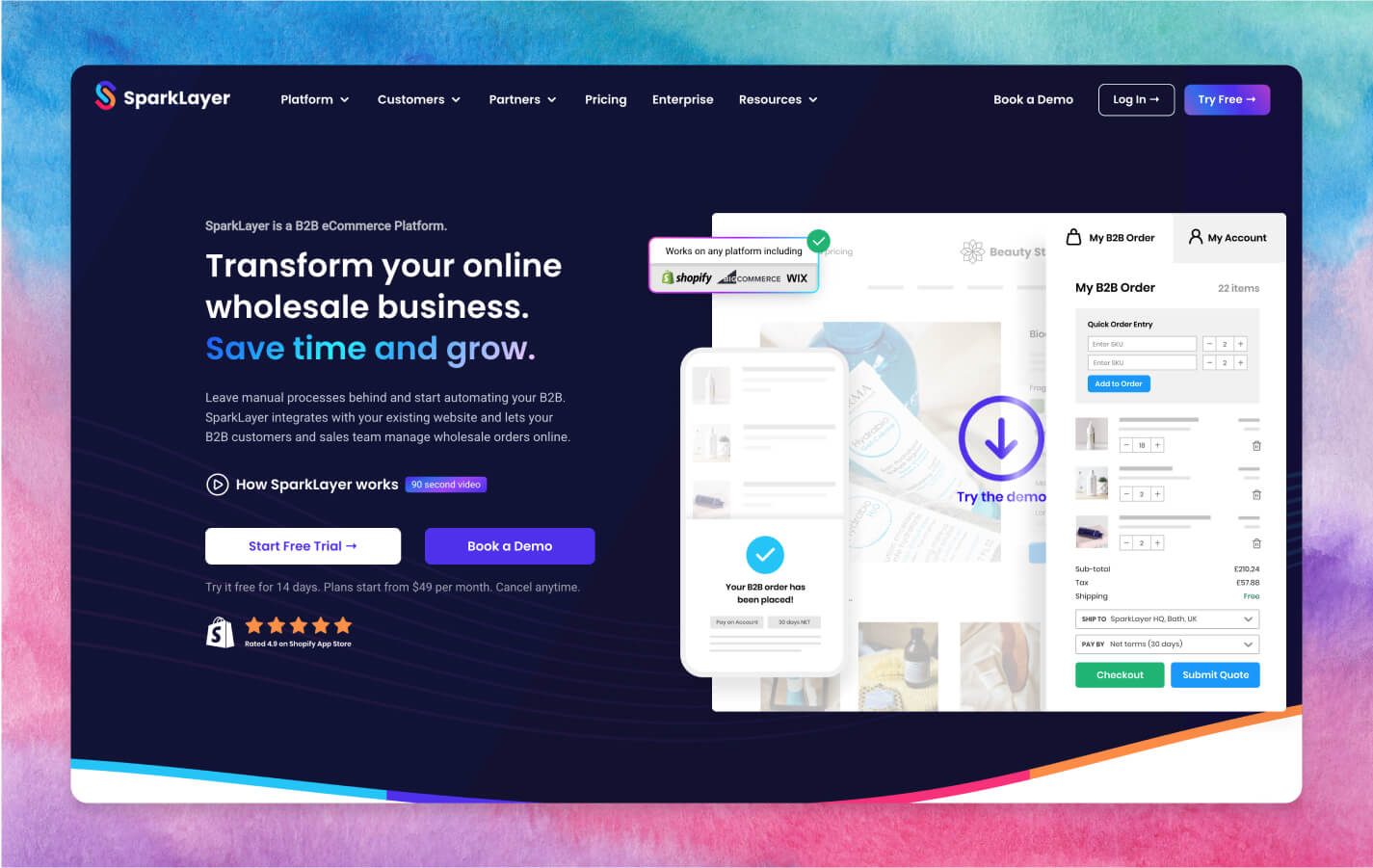
Pricing on paid plans starts at $49/month with no hidden fees and no transaction charges. Unlike many platforms that restrict features or charge per user, SparkLayer includes all essential B2B functionality and substantial user accounts on every paid plan. This allows your entire team (sales reps, account managers, and customer service) to access the platform without extra costs.
Trusted by over 3,500 brands worldwide, SparkLayer gives you full control over your B2B customer experience while keeping your direct-to-consumer and wholesale operations unified and easy to manage.
Why SparkLayer stands out
- Launch on your existing Shopify plan - no Plus required (and other platforms!)
- Get started in hours, not weeks
- Lower total cost of ownership
- All B2B features included as standard
- No transaction fees, no hidden costs
- Considerable user licences on all plans
- Loved by over 3,500 brands
Whether you’re just starting with wholesale or scaling globally, SparkLayer gives you everything you need to succeed with B2B eCommerce.
2. Shopify
Great for B2C but often expensive for B2B, Shopify is undoubtedly a leading platform for direct-to-consumer with growing B2B capabilities.
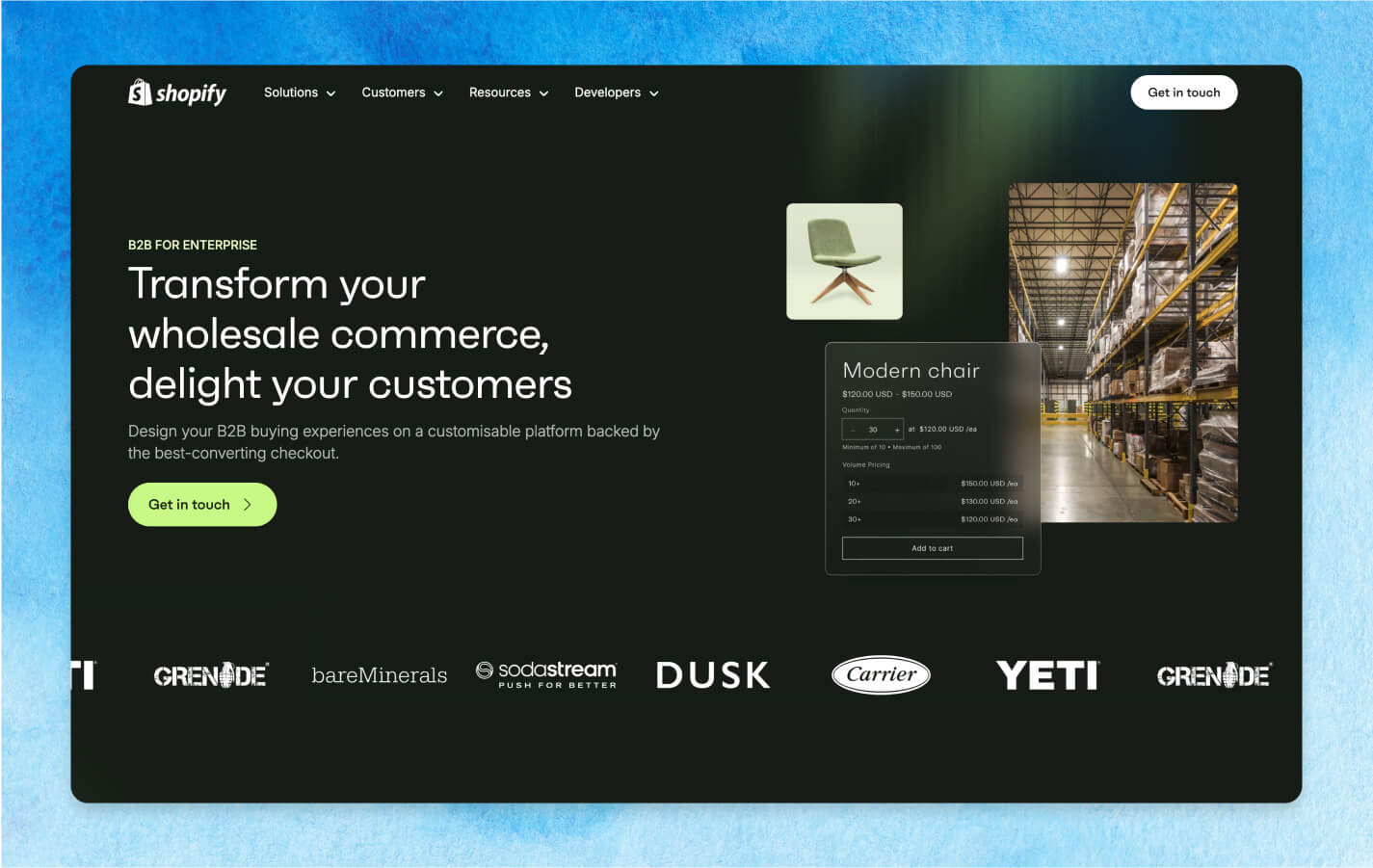
Shopify is a dominant player in the direct-to-consumer space and has expanded its offerings to include B2B features. However, businesses should be aware that many of these advanced B2B tools are only available on the Shopify Plus plan, which starts at $2,500 per month. Additionally, businesses may incur developer or agency fees to customise and fully unlock these features, along with a 0.18% transaction fee on B2B orders.
While Shopify’s B2B functionality is evolving, some businesses find the setup process and associated costs challenging as they scale. Where Shopify falls short for B2B eCommerce:
- DTC platform that’s gone B2B
- High entry costs with Plus required for B2B
- Developer-heavy setup
- Extra fees that scale with your business
Why SparkLayer is a better Shopify B2B alternative:
- Works with any Shopify plan, without needing to upgrade to Shopify Plus
- Plug-and-play setup - no developers needed
- Lower total cost of ownership
- Purpose-built for B2B
- No transaction fees
Head to our latest comparison page for more information on SparkLayer vs Shopify Plus.
3. Wholesale Gorilla
A wholesale app for small-scale B2B, Wholesale Gorilla is a Shopify app tailored to meet the basic needs of merchants starting their B2B eCommerce journey.
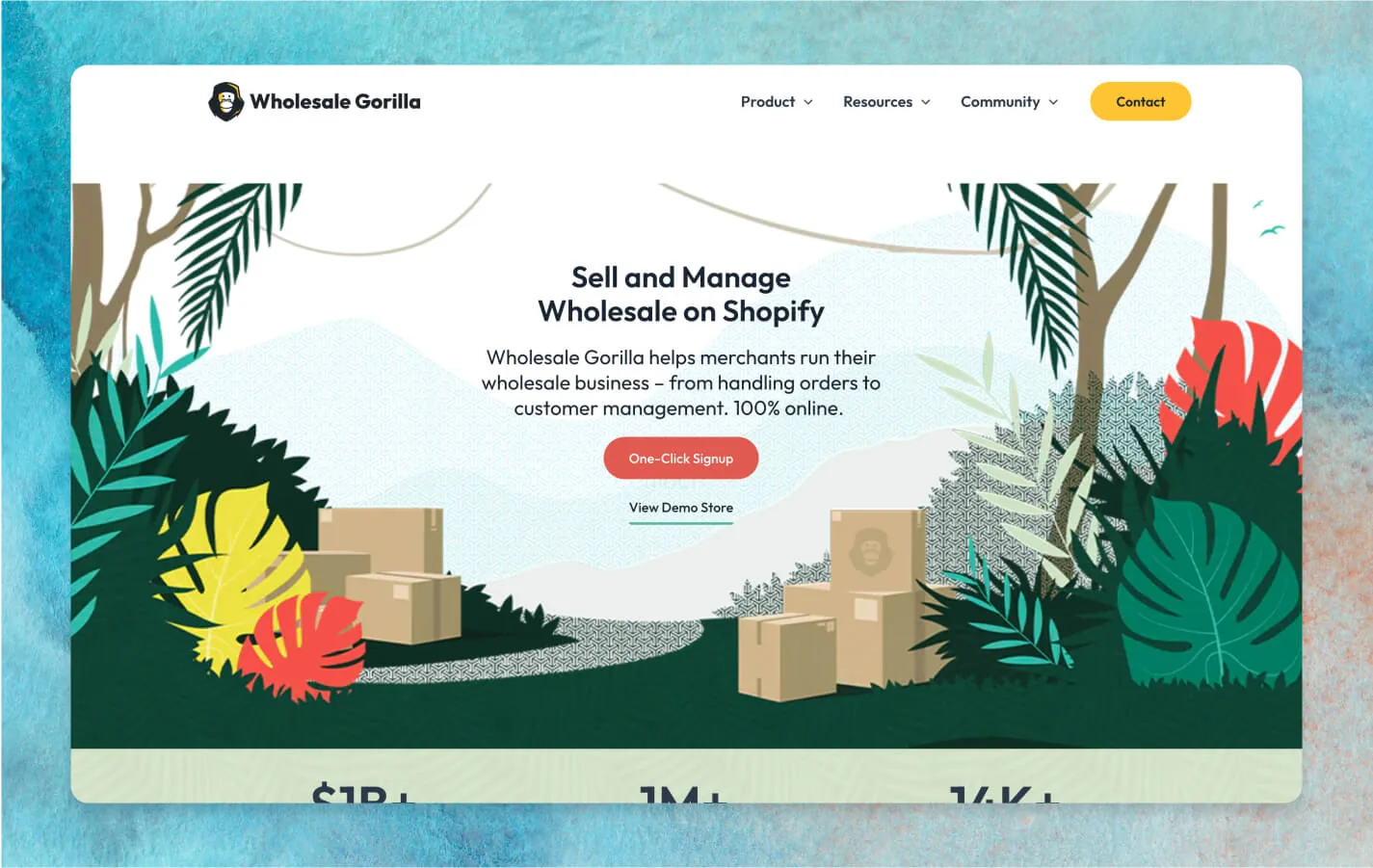
As businesses expand, some users may find that certain advanced features are offered only on higher-tier subscription plans, which could impact scalability and budgeting.
Additionally, product pricing updates in Wholesale Gorilla are managed manually, without automation or import tools, which might require extra time and effort for merchants handling larger or more complex catalogues.
Where Wholesale Gorilla falls short for B2B eCommerce:
- Some features are locked behind higher-tier plans
- Manual product pricing (no automation or import tools)
Why SparkLayer is a good Wholesale Gorilla alternative:
- All features included from day one
- Pricing automation and import tools
- More scalable for growing B2B brands
- Designed specifically for wholesale eCommerce
From just $49/month, SparkLayer includes everything: tailored pricing, customer-specific product lists, Sales Agent tools, and more, making it a more powerful and cost-effective choice.
Head to our latest comparison page for more information on SparkLayer vs Wholesale Gorilla.
4. NuOrder
NuOrder provides a robust B2B eCommerce platform that supports wholesale operations through a dedicated, separate site. This setup allows for tailored wholesale experiences but does require managing multiple storefronts and administrative systems.
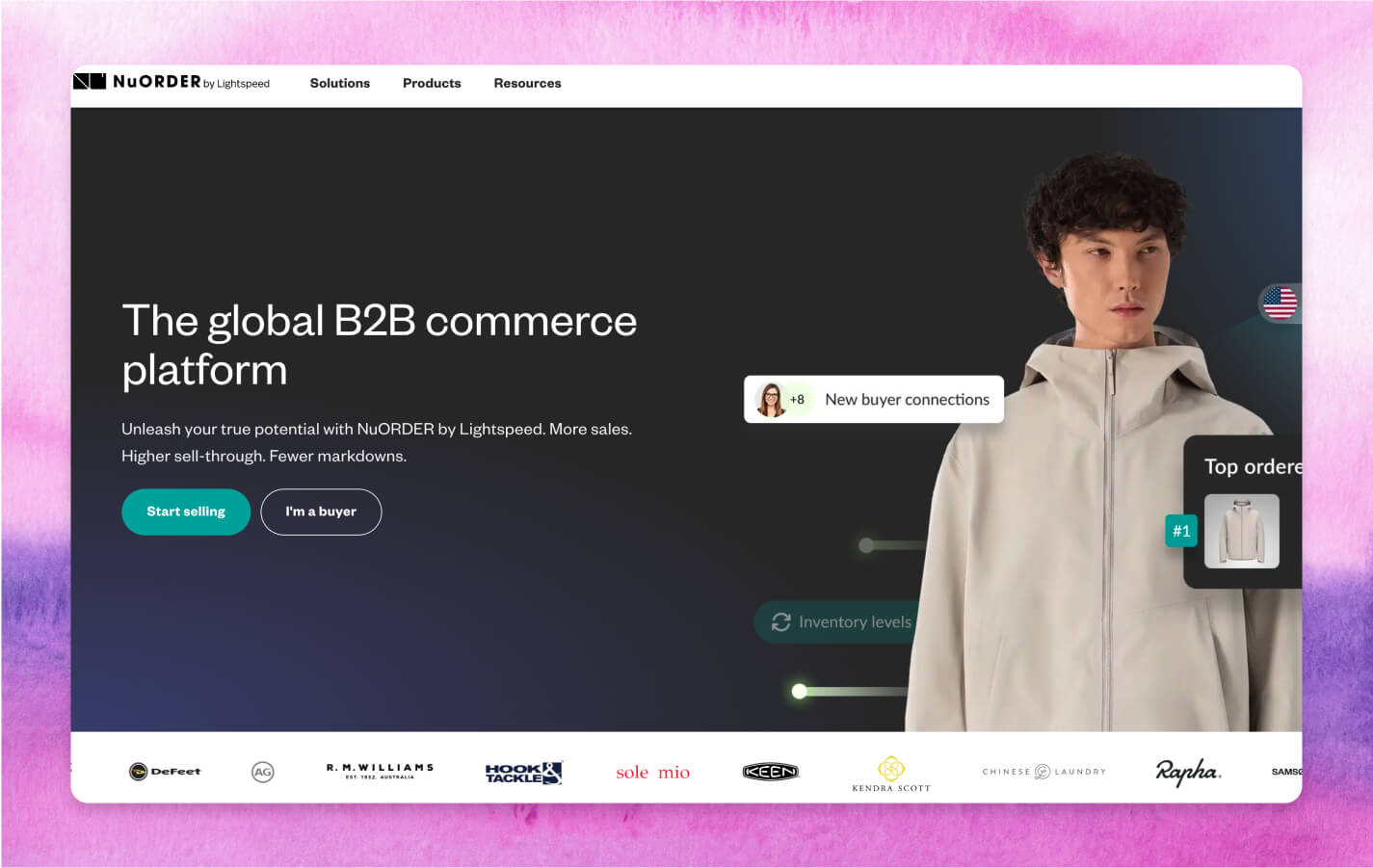
NuOrder’s pricing includes charges per user licence, which can increase costs as your team grows, with a starting price around $7,000 per year plus potential add-ons.
Where NuOrder falls short for B2B eCommerce:
- Separate sites mean more maintenance
- Charges per user licence
- Pricing is quote-based and typically positioned for established wholesale brands
Why SparkLayer is a better NuOrder alternative:
- Layers onto your existing store—no second site needed
- Whole team licences included
- Transparent pricing from $49/month
- Full B2C and B2B in one place
For brands that want simplicity, control, and scalability, SparkLayer is the smarter choice.
Head to our latest comparison page for more information on SparkLayer vs NuOrder.
5. Faire
A marketplace, not a platform, Faire is a well-known wholesale tool that connects brands with independent retailers. It acts as a discovery channel, much like Amazon does for consumers. It offers an easy way for brands to reach new buyers without the need to build and manage their own wholesale storefront.
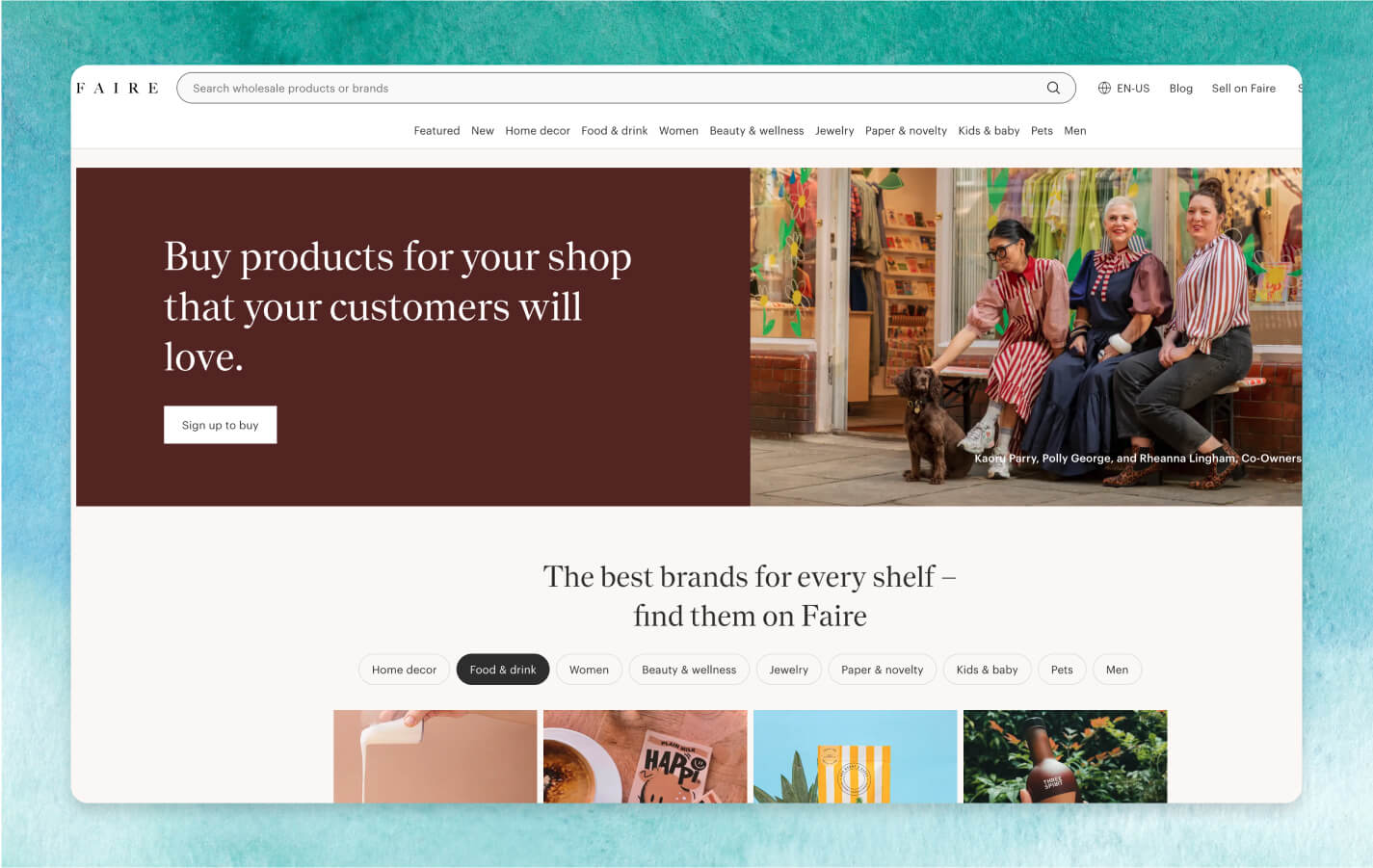
However, because Faire operates as a marketplace, brands need to consider that they are restricted to Faire's requirements for displaying products and don’t fully own the customer relationship. Additionally, there are transactional fees to consider - up to 25% on first orders and 15% on reorders.
Where Faire falls short for B2B eCommerce:
- It’s a marketplace, rather than a B2B eCommerce platform
- Limited control over pricing, presentation, or branding
- You don’t own the customer relationships
- Fees apply for new customer acquisition and marketplace transactions
Why SparkLayer is a better Faire alternative:
- Own the relationship with your customer
- No commission or transaction fees
- Fully customisable buyer experience
- Keep everything on your own website
While Faire is great for discovery and reaching new buyers quickly, SparkLayer provides more control and flexibility for businesses focused on managing and scaling their wholesale business.
Head to our latest comparison page for more information on SparkLayer vs Faire.
6. Joor
Fashion-focused but with marketplace limitations, Joor is a widely recognised wholesale tool, especially popular among fashion and apparel brands.
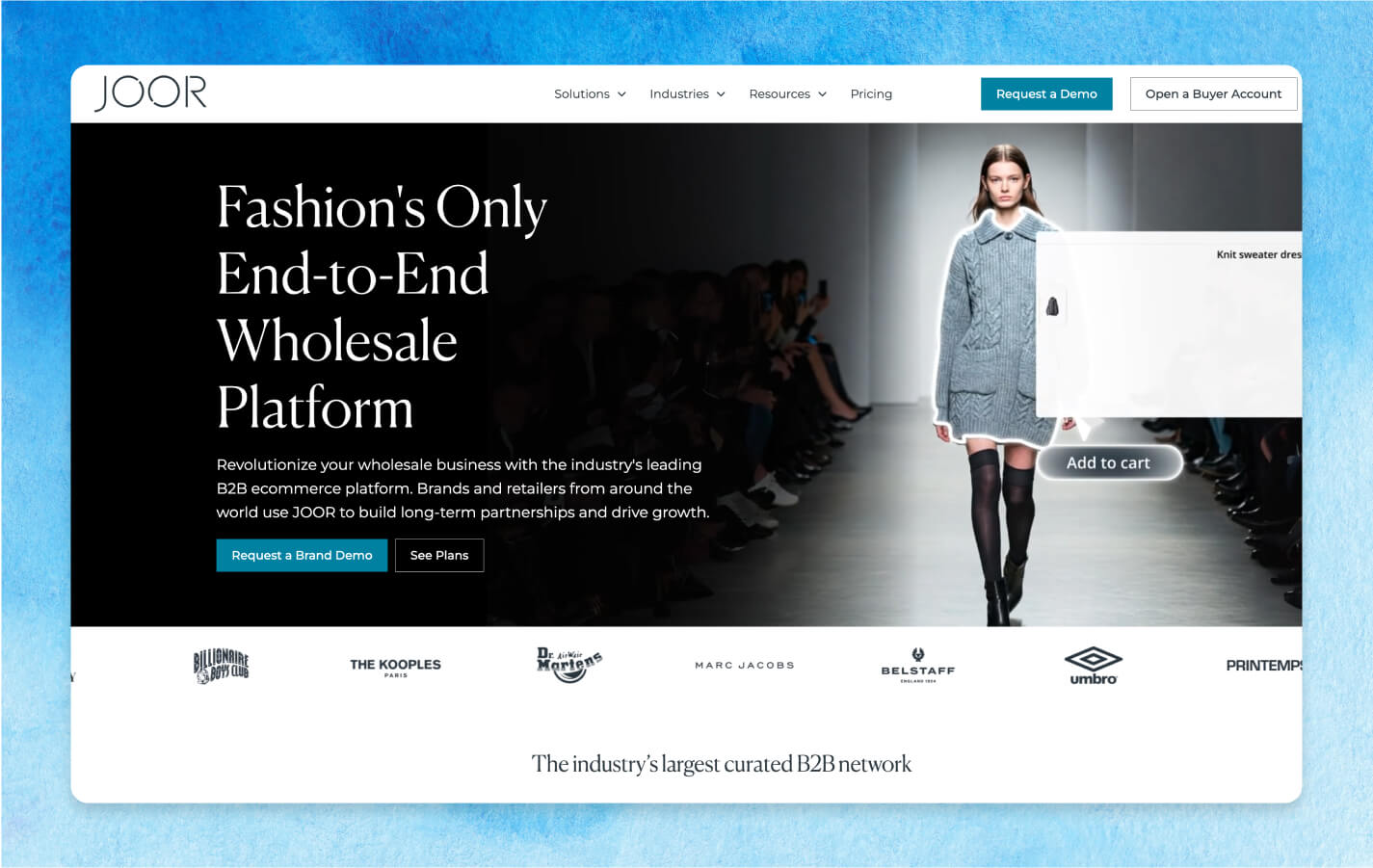
However, for brands outside the fashion industry or those looking to unify their direct-to-consumer (DTC) and B2B sales under one roof, Joor’s marketplace model may not be the ideal fit.
Because Joor operates primarily as a marketplace, it limits the amount of control you have over your brand and customer relationships.
Where Joor falls short for B2B eCommerce:
- Marketplace model
- Only for fashion brands
- Pricing not transparent
Why SparkLayer is a better Joor alternative:
- Industry-agnostic - B2B eCommerce experts
- Layers onto your existing ecommerce
- All-in-one experience for B2C and B2B
- Allows you to own the customer relationship
- Transparent pricing with no commission
While Joor is a good option for fashion brands, SparkLayer is industry-agnostic, giving you powerful, customisable B2B functionality, no matter what you sell.
Head to our latest comparison page for more information on SparkLayer vs Joor.
7. BigCommerce
A strong SaaS platform for B2B, BigCommerce offers native B2B features, customer groups, custom pricing, and purchase order support, without requiring a separate app or a platform upgrade.
It is a genuine alternative to Shopify for merchants who want built-in wholesale functionality and zero platform transaction fees. However, its smaller app ecosystem and steeper design learning curve mean it suits brands with technical resources more than those looking for a plug-and-play setup.
Where BigCommerce falls short for B2B eCommerce:
- Smaller app ecosystem than Shopify means some integrations require custom development
- Page builder and design customisation are harder than competitors, especially without developer knowledge
- Sales rep ordering and quoting require additional apps
Why SparkLayer is a better BigCommerce alternative:
- Layers onto your existing Shopify store with no platform migration required
- Sales reps can place orders on behalf of buyers directly from the storefront
- Built-in Quoting Engine as BigCommerce has no native quoting workflow
- Unlimited customer-specific price lists with no catalogue ceiling
- Real-time ERP and accountancy sync included on all paid plans
8. Adobe Commerce (Magento)
A powerful but expensive enterprise B2B platform, Adobe Commerce (formerly Magento) is the default choice for manufacturers and distributors with genuinely complex requirements, deep catalogue structures, multi-tier pricing, RFQ workflows, and ERP dependencies.
It is the most customisable platform on this list. It is also the most expensive to implement and maintain, with total annual costs running 2-3x the license fee once development, hosting, and ongoing maintenance are factored in.
Where Adobe Commerce falls short for B2B eCommerce:
- Implementation typically takes 6-12 months and requires dedicated developer resource or an agency
- Not suitable for brands without a dedicated technical team to manage the platform post-launch
- Overkill for brands that do not need deep customisation or complex ERP workflows
Why SparkLayer is a better Adobe Commerce alternative:
- Live in hours with no implementation project, agency, or developer required
- Layers onto your existing Shopify store with no rebuild or replatforming
- AI Intelligent Cart reads emailed purchase orders and builds the cart automatically
- Real-time ERP sync with no custom middleware work required
- All B2B features included from day one with no configuration from scratch
9. WooCommerce
A flexible but B2B-limited open-source option, WooCommerce is the commerce layer for WordPress.
It is free to install and benefits from the largest plugin ecosystem in ecommerce. For brands already running WordPress at scale, it avoids a platform migration. The catch is that default WooCommerce has no native B2B functionality — no tiered pricing, no tax exemptions, no net terms, no wholesale order forms. Every B2B feature requires a third-party plugin, and managing multiple plugins at scale introduces performance and compatibility risks.
Where WooCommerce falls short for B2B eCommerce:
- Plugin conflicts at scale cause unexpected issues that require developer time to diagnose and resolve
- Performance management at scale requires ongoing technical expertise, not a set-and-forget platform
- Security and hosting responsibility falls entirely on the merchant, adding operational overhead
Why SparkLayer is a better WooCommerce alternative:
- All B2B features are built in with no plugin stacking required
- Sales reps can place orders on behalf of buyers directly from the storefront
- Net terms and credit limits work out of the box
- Real-time ERP and accountancy sync included on all paid plans
- No server performance or security management overhead
10. OroCommerce
Purpose-built for B2B and nothing else, OroCommerce is designed for manufacturers, wholesalers, and distributors with complex operations.
Unlike every other platform on this list, it ships with CRM, CPQ, quoting, and ERP connectors under a single license — no separate tools required. The trade-off is implementation complexity and a steeper learning curve than SaaS alternatives. It is the right call for enterprises that need deep B2B capability and have the technical resources to support it.
Where OroCommerce falls short for B2B eCommerce:
- The platform's depth can be overwhelming without dedicated onboarding support
- Implementation is complex and typically requires specialist partner resource
- Less suitable for brands that want a fast launch or a simpler setup
Why SparkLayer is a better OroCommerce alternative:
- Live in hours with no specialist implementation partner required
- Layers onto your existing Shopify store with no enterprise replatforming project
- Quoting, rep ordering, and ERP integrations work together under one subscription
- Purpose-built for Shopify merchants scaling wholesale
- No enterprise contract or minimum commitment required to get started
How to choose a B2B eCommerce platform
The best eCommerce platform for your business depends on how you want to sell, grow, and manage relationships. It ultimately comes down to how easily you can access and control your B2B operation, from pricing and customer management to order processing and growth. Here are some key questions to ask yourself when thinking about choosing a B2B eCommerce platform:
| Question | Details |
|---|---|
| 1. Do you want to manage your B2C and B2B eCommerce store from one site? | Many modern brands run both direct-to-consumer and wholesale channels. Managing two separate sites doubles your workload and leaves more room for inventory challenges. A platform like SparkLayer lets you layer B2B features on top of your existing Shopify site so that you can manage your hybrid set-up in one place. |
| 2. Do you want a marketplace or to manage customer relationships directly? | Marketplaces like Faire can be a great way to get discovered by new wholesale buyers quickly. They bring built-in traffic, exposure to thousands of buyers, and a low-effort setup. However, they often take a commission on sales and control much of the buyer experience, from how your products are presented to how you communicate with customers. On the other hand, managing your wholesale store directly through a platform like SparkLayer gives you full control over pricing, branding, and the customer journey. You own the data, the relationship, and the entire buyer experience. But with that control comes added responsibility - you’ll need to drive your own traffic, invest in marketing, and provide support to your wholesale customers. It can be more hands-on, but also far more rewarding in the long run. If you're exploring how to build and grow your own wholesale channel, SparkLayer has a helpful guide on B2B customer acquisition tactics to get you started. |
| 3. What are the transaction fees for eCommerce platforms? | Some platforms charge commission (up to 25% in some cases), while others charge per-user licences or additional fees to unlock features. Look closely at pricing to avoid surprises as you scale! |
| 4. How many users or licences do you need? | Does your team need access? Do you have sales reps? Platforms like NuOrder charge per user, while SparkLayer includes extensive users on every plan. Think about who needs access to your B2B platform (sales reps, account managers, customer service teams), and how that might change as your business grows. Some platforms, like NuOrder, charge per user licence, which can quickly drive up costs. SparkLayer, however, enables you to invite your whole team, giving you the flexibility without worrying about hidden costs or access restrictions. |
| 5. What’s your budget? | When comparing B2B e-commerce platforms, it’s essential to consider more than just the base subscription cost. Some options, like Shopify Plus or NuOrder, offer powerful functionality, but can require a larger investment, especially when you factor in upgrade fees, developer support, or agency retainers. For some brands, these tools may be a good fit, but it’s worth understanding the full scope of costs upfront. If you're looking for a more cost-effective option without compromising on features, SparkLayer offers full B2B functionality starting from just $49/month on our paid plans. That includes everything from custom pricing and catalogues to sales rep tools and user licences - no extra fees to unlock key features. |
Choosing the Best B2B eCommerce Platform for Your Business
There’s a huge opportunity in wholesale, but choosing the right B2B eCommerce platform comes down to how you want to manage customers, pricing, ordering, and growth.
Some businesses benefit from marketplaces that help drive discovery, while others need full control over their customer relationships and wholesale experience. It's also important to consider factors like transaction fees, user licences, implementation requirements, and whether you want to manage B2C and B2B from the same store.
Ultimately, the best platform is the one that fits your business model while giving you room to scale.
Each solution on this list has its strengths, but for brands looking to add powerful wholesale functionality without rebuilding their existing store, SparkLayer offers a flexible and scalable approach.
Start free, or trial every feature for 14 days on a SparkLayer paid plan.